
Introduction: Discovering the Warehouse, Factory Tour
After arriving in Hamamatsu via JR or other lines, it’s about a 10-minute walk from Enshu Komatsu Station on the local Enshu Railway line. Passing through a residential neighborhood and turning into a small alley, an old wooden warehouse with black walls appears. Together with the surrounding scenery, it feels like stepping into a place where time flows slowly.
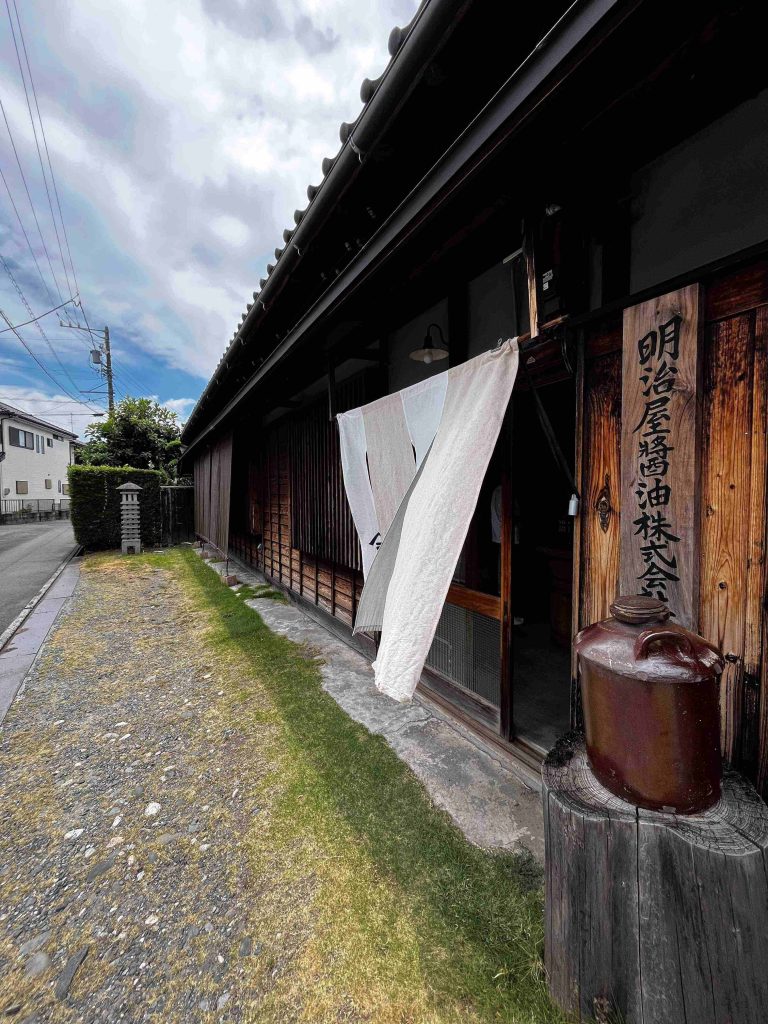
The structure itself is a sight to behold. Each process—koji production, brewing, storage, pressing, pasteurization—is cleverly arranged to utilize the warehouse’s elevation changes. Inside, cedar-plank walls, aged timber, and tools that speak of time stand quietly.
Walking through, we learned from the tour guide about the raw materials (soybeans, wheat, salt, water), the manufacturing process, and the maturation and fermentation. It made us realize anew that behind the soy sauce we use every day lies this level of effort, time, and the changes wrought by nature.
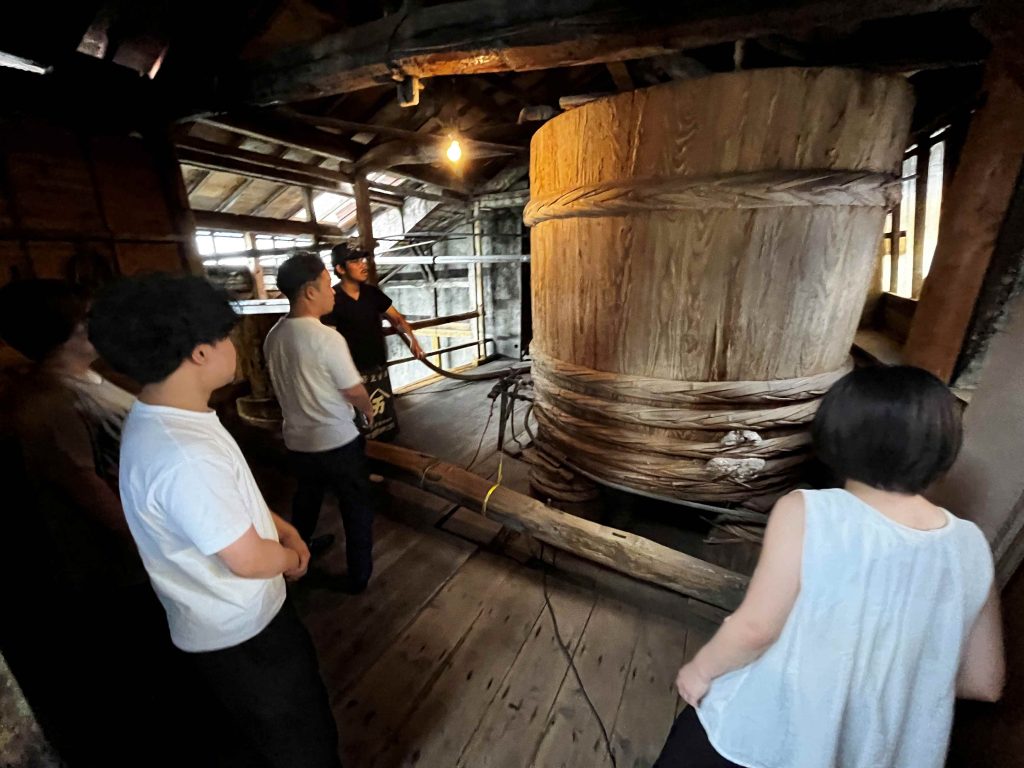
In addition, the three buildings comprising the storehouse, shop, and detached structure, along with the shop and main house, were designated as National Registered Tangible Cultural Properties in 2016, possessing significant architectural and historical value.
Soy Sauce Pressing Experience: The Moment of Pressing 1.5-Year-Aged Moromi
The course I chose was the “Soy Sauce Pressing Experience.”
The experience flow was as follows:
Factory Tour
Soy Sauce Lecture (Ingredients, Fermentation, Aging, etc.)
Soy Sauce Pressing Experience
Tasting on Tofu (“Taste Test”)
Filling Containers with Pressed Soy Sauce to Take Home
During the soy sauce pressing experience, you get to wrap the 1.5-year-aged “moromi” in a cloth bag and apply pressure from above to squeeze out the soy sauce liquid.
Actually lifting the cloth bag and witnessing the liquid slowly seeping out fills you with tension and awe right down to your fingertips. Bringing your nose closer, the distinctive fermented aroma unique to natural brewing rises up.
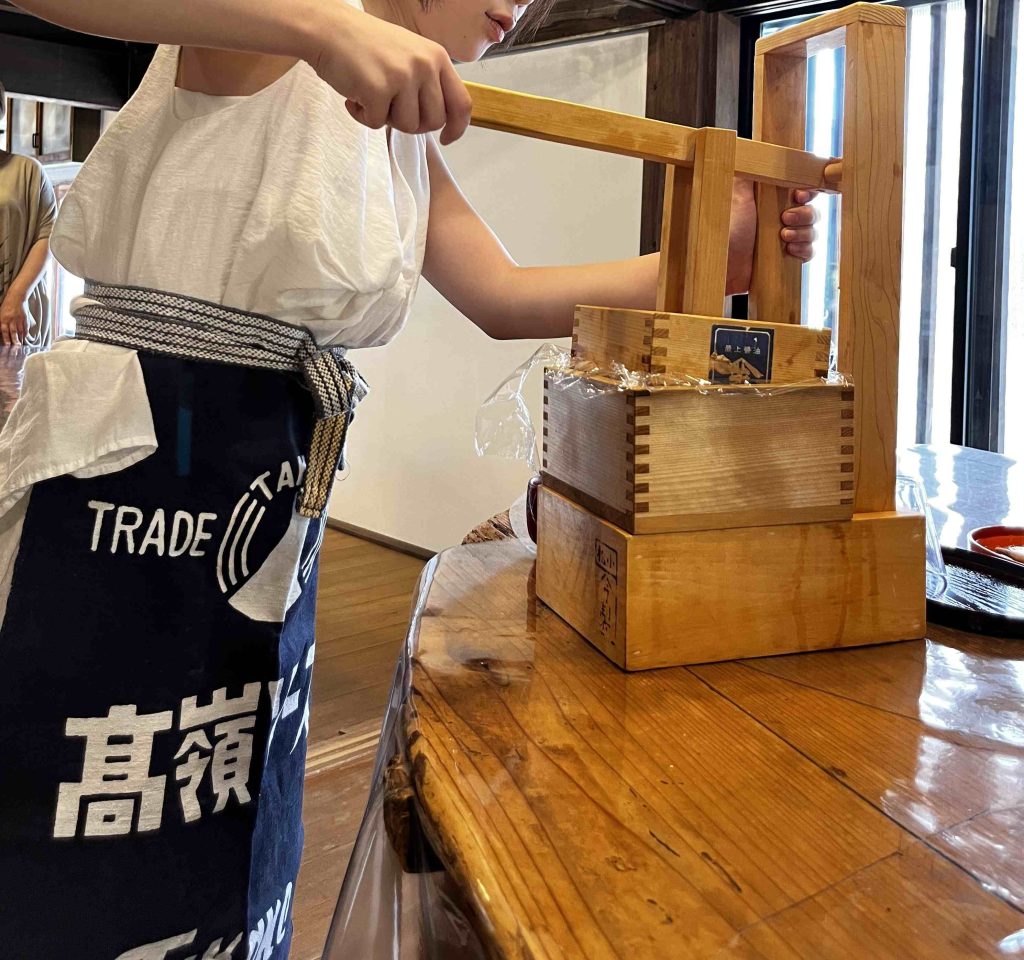
After squeezing, the soy sauce is bottled and taken home. Freshly squeezed soy sauce is said to be “alive,” and there was a note advising refrigeration or storage in a cool place.
The words from the kura staff, “The bacteria are alive, so temperature control is crucial,” left a strong impression. On the other hand, there also seems to be an opportunity to taste it, and the time spent drizzling it over tofu to appreciate its freshness is a luxury.
What I felt through the experience, the ingenuity, and the elements that made it worthwhile
A time when the senses are sharpened
Inside the warehouse, humidity and temperature are subtly controlled, blending the fermenting aroma of the moromi, the scent of wood, and the texture of well-used tools into one. The feel of my hands and fingers holding the cloth bag, the sensation of touching the moromi, the speed at which the liquid seeps out… It’s an experience that sharpens the senses.
Conversations with Staff Deepen Learning
During the experience, the brewery guide patiently answered questions. “Why is it aged for a year and a half here?” “Why use the ‘Shizuku Soy Sauce’ method, pressing without pressure, relying solely on natural weight?” “What microorganisms inhabit the wooden barrels?” Guided by the staff, we gained deep insights.
Meijiya Soy Sauce employs initiatives like their “Kuradashi Soy Sauce,” using locally sourced soybeans and wheat, with ingredients cultivated on their own farms. Their strong commitment to meticulous sourcing is evident, employing methods free from pesticides and chemical fertilizers.
Enjoyment that continues after the experience
Not only can you take home the soy sauce you pressed, but if you chose the brewing experience, the fun continues as you watch it ferment at home. You can track the fermentation process yourself by observing changes in the moromi’s color and aroma, monitoring its maturation, and even trying a “pressing” step along the way.
Furthermore, the direct sales shop stocks various Meijiya Soy Sauce products (soy sauce, miso, sauces, etc.), so you won’t struggle to find souvenirs beyond what you pressed.
Notably, Meijiya Shoyu also crafts a winter-limited soy sauce called “Shizuku,” made using a method where it is pressed “drop by drop” using only gravity. Because it avoids high mechanical pressure, it highlights the characteristic features of a subtle soybean aroma and the inherent sweetness of soy sauce.
